Regional Growth Prospectuses show how UK coastal regions can secure multi-billion pound economic boost from offshore wind supply chain investments
Regional Growth Prospectuses released today (19/05/25) by the Offshore Wind Industry Council (OWIC) and The Crown Estate set out how coastal regions around the country can expand their activities in key parts of the UK’s rapidly-growing offshore wind supply chain. This would create and sustain an additional 10,000 new jobs, on top of the 100,000 already expected in the industry, and boost the UK’s economy by over £25 billion between now and 2035.
The prospectuses build on the sector’s Industrial Growth Plan (IGP) for offshore wind, which set out national priorities to maximise growth by manufacturing key components such as turbine towers, blades, foundations and cables, as well as building and maintaining offshore wind farms and providing high-value services such as environmental surveying. Ports are vital to maximise the opportunities set out in the Industrial Growth Plan and are highlighted in the prospectuses, reflecting their significant role in driving economic and industrial development.
Each prospectus is tailored to a specific offshore wind “cluster” – a coastal region where companies involved in the sector are already concentrated, and where there is an expectation that other firms will join them as the industry’s supply chain continues to grow. The idea was initiated by the clusters themselves in the OWIC clusters forum, and they have all been involved in the project to compile the prospectuses:
- Offshore Energy Alliance (North Wales and North West England)
- Celtic Sea Cluster (South Wales and South West England)
- EastWind Cluster (East of England)
- The Humber Offshore Wind Cluster (Humber Region)
- Energi Coast Cluster (North East England)
- The Clean Energy Cluster (Scotland)
- Northern Ireland Maritime & Offshore cluster (Northern Ireland)
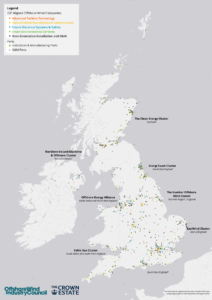
The South East of England has also been included in this work, recognising its offshore wind capabilities and opportunities. The prospectuses contain detailed analyses of the coastal regions which are best placed to undertake each specific activity set out in the IGP, including where the UK could build on existing facilities where huge components such as blades and cables are already being manufactured at scale and exported worldwide.
For example, clusters in the Humber, the north east of England, Northern Ireland and Scotland have opportunities to focus on advanced turbine technology including manufacturing blades and turbine towers, as this would add up to £8bn to the UK economy over the next ten years.
Seven clusters aim to develop new capabilities in turbine foundations (including massive substructures for floating offshore wind), adding up to £12 billion between now and 2035
Four clusters are targeting the cables and electrical systems needed to meet our offshore wind ambitions, adding up to £3.4bn.
There are major opportunities in seven clusters to expand activity installing, operating and maintaining offshore wind farms, worth £2bn, and five clusters could become centres for environmental services worth £0.5b
Helen K Thomas (RWE) and Stuart Barnes (EnBW) – co-chairs of The Offshore Energy Alliance (OEA) cluster praised the work of the Regional Growth Prospectuses and the definitions they offer for distinct regions of the country:
“The work undertaken has highlighted the unique capabilities that each region has to offer the UK offshore wind opportunity. In addition and crucially, it links the impressive work of the Industrial Growth Plan to the deliverables that each cluster should strive to achieve, to ensure that we each play our role in the wider mechanics of success. For the OEA region, there is a focus on growing jobs, skills and capability in: Future Electrical Systems & Cables, Smart Environmental Services, Next Generation Installation,
O&M & Decommissioning, Ports and Industrialised Foundations & Substructures. It is an absolute pleasure to co-lead this cluster in a region that is no stranger to offshore wind and has a huge amount to offer, if collectively we can deliver on the findings of the prospectus and on what is needed for UK plc.”
RenewableUK’s Deputy Chief Executive Jane Cooper, a Director of the Offshore Wind Industry Council (OWIC), said:
“These prospectuses show in detail how the UK can secure billions in new investment in offshore wind manufacturing and servicing in key locations around the country, building on our strengths and successes to date, providing clarity for Government and industry. Working with The Crown Estate and the clusters, OWIC has been able to set out which high-value components and services are the best fit for each area. Many of these clusters are already hosting a wide range of offshore wind supply chain companies serving projects here and exporting goods and expertise worldwide, but we can ramp up these activities to a significantly higher level, as these prospectuses demonstrate”.
Will Apps, Offshore Wind Strategy Director at The Crown Estate, said:
“These prospectuses showcase the exciting investment opportunities possible through developing the UK’s domestic offshore wind supply chain, creating jobs and economic growth across the country. Critically, the prospectuses seek to unlock the link between the potential strengths of individual regions and set these against the wider domestic and export market opportunity, supporting onshore communities in realising the local economic benefit offshore wind can bring.”
Energy Minister Michael Shanks, OWIC Government Vice-Chair said:
“The clean energy transition is the economic opportunity of the 21st century. Our clean power mission isn’t just about delivering energy security and renewable energy to UK homes and businesses; it is also creating jobs and driving investment in our industrial heartlands. Communities are right at the heart of this energy transition, and that’s what these reports show – coastal communities from the North East of Scotland to the South West of England are benefitting from clean, high-skilled jobs in the offshore wind sector.”
Ophelia Maxwell, Offshore Wind Delivery Programme Manager at RenewableUK and the Offshore Wind Industry Council’s Clusters Workstream Delivery Lead said:
“Recognising the notable collaboration across the UK offshore wind clusters to deliver these prospectuses, they highlight regional supply chain capabilities and port opportunities, which in turn will support national growth. By targeting investment into these coastal communities using national frameworks and government strategies, we hope to see how the UK can unlock significant economic and industrial benefits for the future”.